
Fine Motor Skills for Kindergarten Readiness
Fine motor skills are controlled movements of the small muscles in the hands and fingers; for kindergarten readiness, they matter when a child can use that control for common classroom tasks such as handling small objects, drawing or tracing, cutting, and stabilising materials with the other hand. Readiness is functional and task-specific: look for purposeful, increasingly consistent control across several tasks rather than one required pencil grip or a single pass-or-fail milestone.
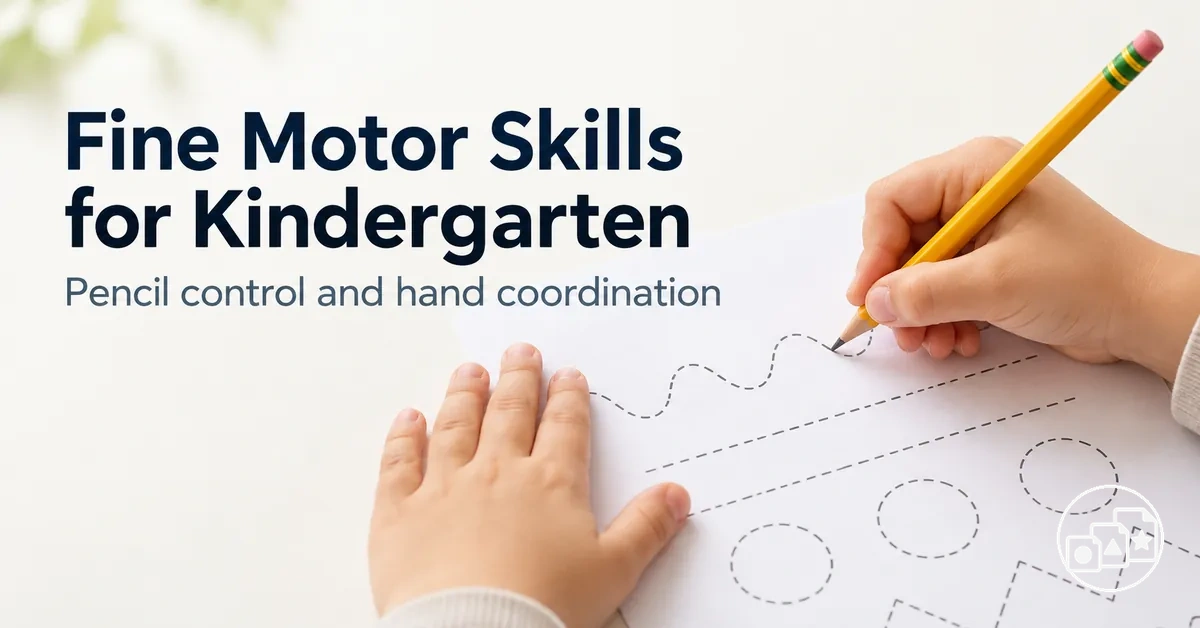
Fine motor readiness at a glance
Use the pattern of control across tasks to understand what a child can do now and which task demand to practise next.
- Small-object control
- Pick up, position, manipulate, and release classroom objects with purposeful finger control.
- Visual-motor guidance
- Guide the hand towards a visible target or along a path during placing, tracing, or cutting.
- Two-hand coordination
- Use one hand for the precise action while the other stabilises or repositions the material.
- Tool control
- Make intentional pencil marks and operate scissors with enough stability, pressure, and directional control for the task.
Interpretation rule: an emerging skill may appear only in some attempts or under simpler conditions; consistently functional control is reliable enough for the same kind of task under comparable conditions.
Adjust the challenge: change object size, resistance, target or path precision, material stability, or the amount of two-hand coordination required.
Different tasks place different demands on the same underlying abilities. A child may handle manipulatives confidently but need more support with pencil or scissor control, so one isolated skill should not be used to decide overall kindergarten readiness or make a diagnosis.
Table of Contents
Core Fine Motor Abilities Used in Kindergarten Tasks
Fine motor abilities used in classroom tasks depend on several interacting forms of control rather than one isolated skill.
How the core abilities work together
Hand strength and dexterity
Provide force, grasp, manipulation, and precision for handling tools and small classroom objects.
Visual-motor control
Guides hand movement towards a visible target or along a path, such as a tracing line or cutting line.
Bilateral coordination
Lets one hand perform the precise action while the other stabilises or repositions paper or other material.
Pencil and scissor control
Applies stability, pressure, visual guidance, and two-hand coordination to intentional mark-making and cutting.
The mix of hand control required can differ by task and by a child's development, so no single fine motor ability establishes overall kindergarten readiness.
These demands also affect how children engage with broader kindergarten readiness worksheets that involve drawing, marking, tracing, cutting, or handling classroom materials.
Hand and Finger Strength, Dexterity, and Small-Object Manipulation
Hand strength and finger strength provide force for squeezing and maintaining a grasp, while dexterity provides the precise, controlled finger movements used to manipulate and reposition small objects.
Strength can support control against resistance, but force does not substitute for precision; a task may require both.
- Pinch
- Uses precise finger control to pick up and hold small manipulatives.
- Finger isolation
- Allows individual fingers to act more independently during detailed hand actions.
- Grasp and controlled release
- Supports picking up, positioning, and deliberately placing classroom materials.
- Short-task endurance
- Helps maintain hand control for the duration of a brief fine motor activity such as drawing or manipulating classroom materials.
Together, force, precision, controlled release, and endurance make small-object handling easier when the material, resistance, and task demand match the child's current hand control.
Hand-Eye Coordination and Visual-Motor Control
Hand-eye coordination uses visual information about a target to guide hand movement, while visual-motor control helps align that movement with the target or path.
This visual guidance supports movement accuracy; it describes a functional movement relationship, not a vision diagnosis or proof of reading ability.
What the eyes guide the hands to do
Thread or place
Align a string, bead, or small object with a visible opening or intended location.
Trace
Keep pencil movement related to the visible line, boundary, or shape.
Cut
Guide the scissors in relation to a visible cutting line while the paper is managed by the other hand.
A child may correct the movement as the hand responds to the visual target, so performance can change with the path, object, or task demand.
The most useful outcome to observe is accuracy and consistency of guided movement, not speed alone.
Bilateral Hand Coordination
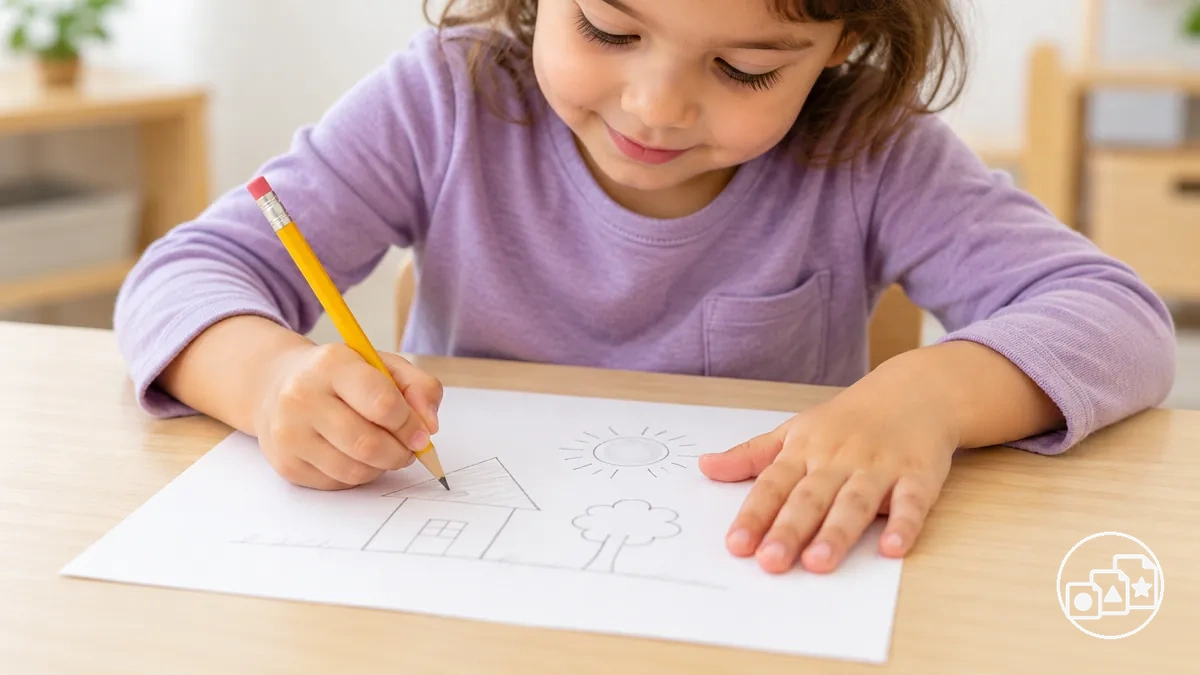
Bilateral hand coordination is the coordinated use of both hands in one task, often with a working hand performing the more precise action while a stabilising or assisting hand holds or positions the material.
These complementary roles support task stability and control. Which hand performs each role can vary with the activity and should not be treated as a readiness score or a conclusion about hand preference.
Two hands, complementary roles
Working hand
Controls the pencil or scissors, or manipulates one part of a threading or construction task.
Stabilising or assisting hand
Holds, positions, or repositions paper and other material so the precise action has a more stable base.
The exact roles can change with the task, but coordinated two-hand use increases material stability and supports more controlled manipulation.
Pencil Grip and Pencil Control
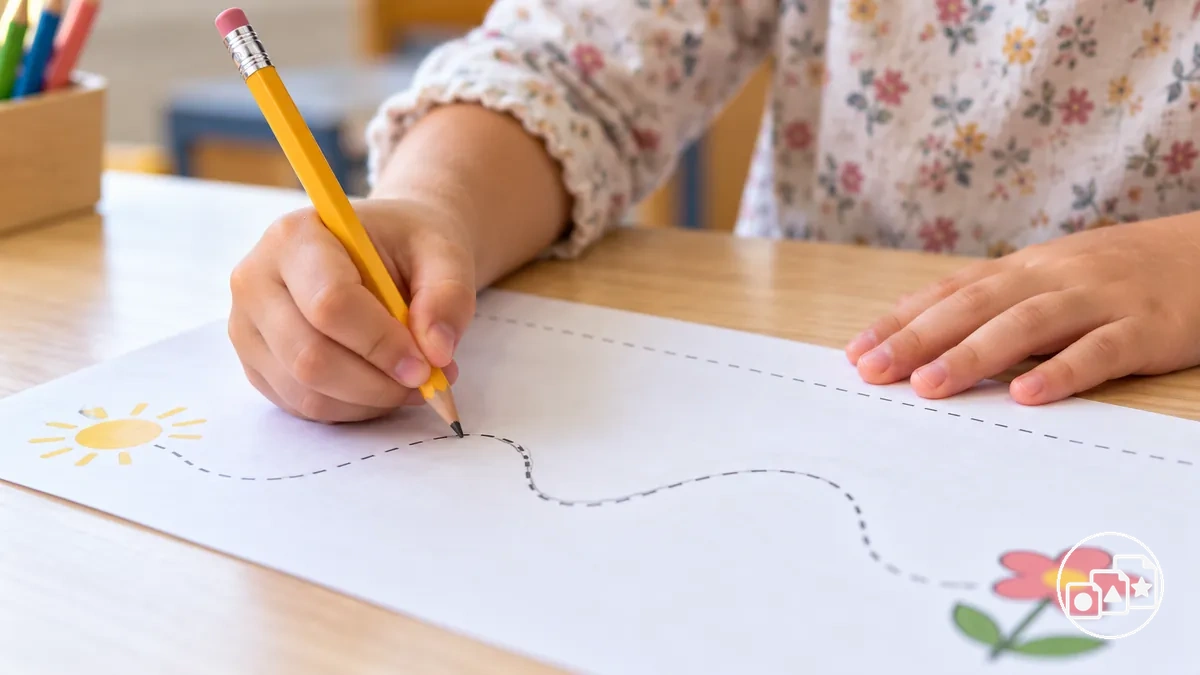
Pencil control is the ability to guide a pencil or similar writing tool with enough stability and movement precision to make intentional marks.
Pencil grip contributes to that control by providing a stable, comfortable grasp, but grip shape is not a single pass-or-fail measure of functional pencil use.
A functional grasp can vary between children when it allows purposeful control without unnecessary discomfort or effort.
Judge the function, not the appearance alone
Useful functional signs
- The pencil remains stable enough for the task.
- Pressure is sufficient to make intentional marks without relying on excessive force.
- Movement is precise enough for the drawing or tracing demand.
- The grasp can be maintained without unnecessary discomfort or effort.
What appearance cannot decide
Finger placement and grasp patterns can differ between children and can change with development. An unusual-looking grip may still be functional, while a familiar-looking grip is not automatically efficient if control, comfort, or sustained use is poor.
The practical focus is whether the grasp supports stable, efficient, and comfortable production of intentional marks for the task being performed.
Scissor Control and Cutting Skills
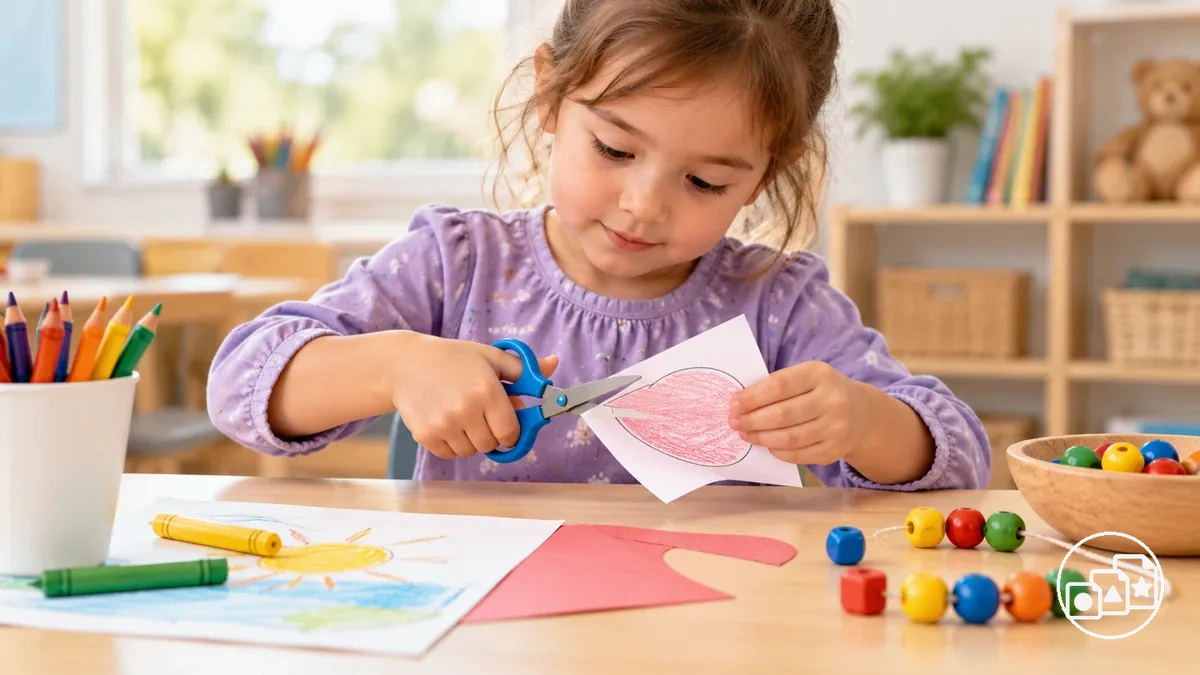
Scissor control combines opening and closing the scissors, maintaining tool control, stabilising and repositioning the paper with the other hand, and visually guiding the cut.
Cutting therefore brings tool control, bilateral coordination, and visual guidance together within one task.
- SnipOpen and close the scissors with enough control to cut the material while the other hand keeps the paper positioned.
- Follow a straight lineAdd forward guidance along a visible path while the stabilising hand manages the advancing paper.
- Follow a simple shapeAdd direction changes, which require more precise visual guidance and coordinated repositioning of the paper.
Performance can change with the material, line or shape, task design, and prior experience. The sequence from snipping to line following to simple shape following describes increasing task complexity, not a universal age schedule.
Cutting can provide useful information about fine motor readiness for classroom tasks, but cutting performance alone does not establish overall kindergarten readiness.
Fine Motor Milestones and Readiness Indicators Before Kindergarten
Fine motor readiness indicators are observable functional abilities that suggest increasing independence in relevant hand and finger tasks before kindergarten. They are most useful as a pattern across small-object control, purposeful pencil use, cutting, coordinated two-hand use, and relevant self-care manipulation rather than as one pass-or-fail requirement.
Developmental timing and performance can vary between children and between tasks, so the same ability can be emerging in one context and consistently functional in another.
- Emerging skill
- The child can perform the movement in some attempts or under simpler task conditions, but control is not yet reliable across comparable attempts.
- Consistently functional
- The child can use the required control reliably enough for the task under comparable conditions, without implying a universal score or age threshold.
| Fine motor task | Observable state | Readiness implication |
|---|---|---|
| Small-object control | Picks up, positions, and releases small classroom objects with increasing precision and control. | Suggests increasing functional independence when handling manipulatives and similar materials. |
| Purposeful pencil use | Uses a stable grasp and sufficient pencil control to make intentional marks, draw, or trace for the task. | Shows increasing control of a writing tool for common classroom mark-making demands. |
| Cutting | Opens and closes scissors with control while coordinating the paper and visually guiding a simple cut. | Indicates increasing integration of tool control, visual guidance, and coordinated hand use. |
| Coordinated two-hand use | Uses a working hand with a stabilising or assisting hand to control paper or other materials. | Supports greater independence in classroom tasks that require bilateral coordination. |
| Self-care manipulation | Manipulates relevant fasteners or similar small items with increasing control when the task is familiar. | Suggests increasing functional independence in fine motor aspects of everyday routines. |
An emerging skill can still be meaningful when the child is beginning to coordinate the required movements; consistent control shows that the skill is more reliably functional under comparable conditions.
Performance can change when materials, precision demands, or task complexity change, so a child who manages a simpler version may need more support as the same motor demand becomes harder. This is why it can be useful to adapt worksheet tasks to skill level when task difficulty exceeds current control.
Use the indicators as a pattern of observable function across relevant tasks, and adapt the task when its demand exceeds current control rather than requiring every child to demonstrate every skill at the same level.
How Fine Motor Skills Support Writing and Worksheet Readiness
Fine motor control supports the physical execution of early writing and worksheet tasks, including drawing, tracing, copying simple marks, and using a pencil on paper. It contributes to writing readiness by helping the hands control a writing tool with stability and precision.
Fine motor skill is one part of writing and worksheet readiness, not the whole of either. Hand strength and dexterity support pencil movement, visual-motor coordination aligns movement with visible paths or marks, and bilateral stabilisation helps keep the paper positioned.
Grip stability, pressure control, and sustained precision help a child continue controlled mark-making across a short task; these are physical task demands rather than direct measures of literacy or academic ability.
| Fine motor ability | Writing or worksheet demand | Practical implication |
|---|---|---|
| Hand strength and dexterity | Holding and moving a pencil during drawing, tracing, or copying simple marks | Supports controlled movement of the writing tool for the task. |
| Visual-motor coordination | Aligning pencil movement with a visible path, shape, or mark | Supports movement accuracy during tracing and copying. |
| Bilateral stabilisation | Keeping paper positioned while the other hand uses the pencil | Provides a more stable surface for controlled mark-making. |
| Grip stability and pressure control | Maintaining the pencil while applying enough pressure to make intentional marks | Supports consistent pencil control without relying on excessive force. |
| Sustained precision | Maintaining controlled mark-making across a short worksheet task | Supports continued physical control as the task proceeds. |
These abilities support the physical execution of writing and worksheet tasks, but they do not by themselves determine handwriting quality, literacy development, or later academic outcomes. Broader pre-writing readiness also involves developmental and learning demands beyond fine motor control.
Worksheet difficulty can change with tracing precision, the amount of mark-making, and other task demands, as well as with the child's current pencil control.
Fine motor control is most useful here as an explanation of the physical demands involved in completing the task, not as a complete measure of writing readiness.
Activities That Build Fine Motor Skills for School Readiness
Choose fine motor activities by matching the target skill to the child's current level of control rather than by trying to complete a large number of different activities. The task should practise a clear motor demand while remaining achievable enough for purposeful attempts.
The same activity can be made easier or harder by changing its task features: object size changes precision demand, resistance changes force demand, a smaller target or narrower path increases accuracy demand, and requiring one hand to stabilise material while the other works increases bilateral demand.
Threading, tongs, playdough, tracing, drawing, and cutting can therefore practise different aspects of control depending on how the materials and task are configured.
Choose and adjust the task with these five checks
- Target skill: Choose a task that requires the type of control being practised, such as grip and manipulation, precision, coordinated two-hand use, or controlled tool movement.
- Material demand: Adjust object size or resistance to change the motor demand; for example, changing the size of an object alters the precision required to grasp and position it, while changing resistance alters the force needed to manipulate it.
- Precision demand: Increase or reduce how accurately the hand must reach, place, trace, thread, or cut by changing the size of the target, opening, path, or object.
- Two-hand demand: Add bilateral demand when the target skill involves one hand stabilising or positioning material while the other hand performs the more precise action.
- Achievable challenge: Match the challenge level to current control so the child can attempt the target movement purposefully, then increase task difficulty by changing the material or precision required as greater control becomes manageable.
Repeated practice is most purposeful when the activity continues to exercise the target skill while the demand remains achievable enough for controlled attempts.
Rather than adding activities for quantity alone, adjust object size, resistance, precision demand, or two-hand demand as the child gains control.
Playdough, Tongs, and Clothespin Activities
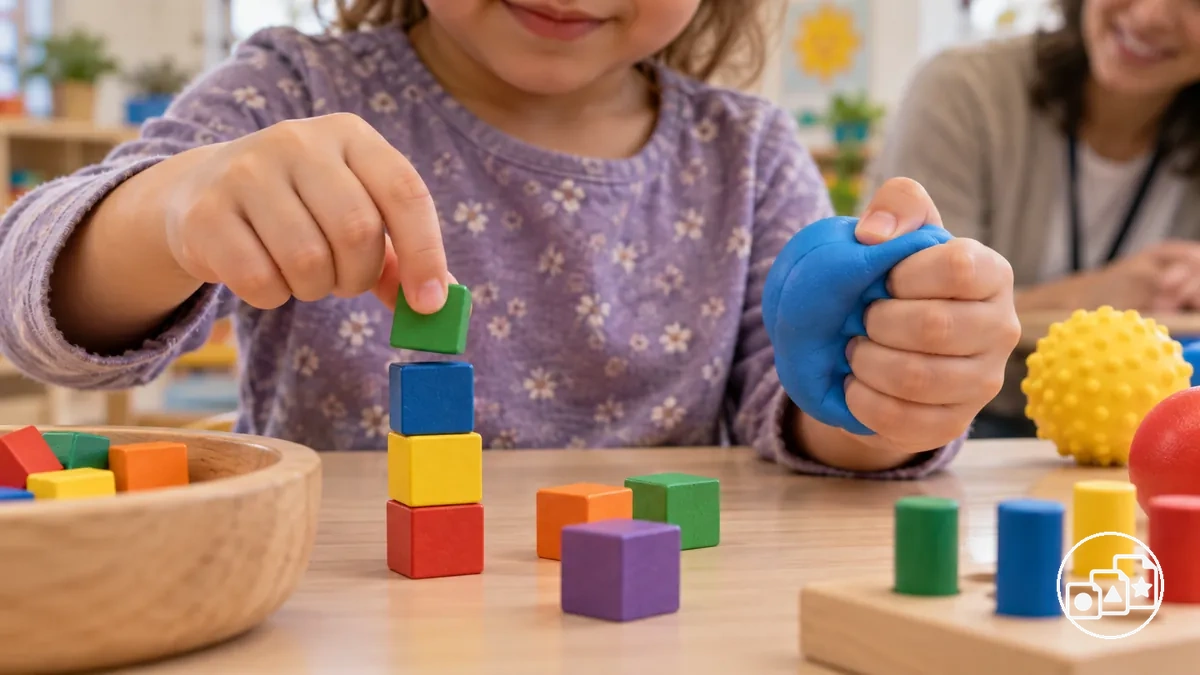
Playdough, tongs, and clothespins can practise hand actions involved in pinch strength, grasp control, finger isolation, and controlled release.
Squeezing, rolling, and pinching playdough add hand resistance, while tongs and clothespins require the fingers to grasp or pinch and then release with control.
The most useful adjustment variables are object size, placement precision, and resistance.
- Tongs and object size
- Larger, easier-to-grasp objects reduce precision demand; smaller objects require more precise grasp and release when they are appropriate to the child's current control and safe for the activity.
- Clothespin resistance
- A firmer clip increases the force required for the pinch action, while accurate placement adds a separate precision demand.
- Playdough firmness
- Softer material requires less resistance to squeeze or pinch; firmer material requires more force for the same hand action.
Threading, Beading, and Construction Play
Threading, beading, and construction play combine precise grasp, visual guidance, object placement, and bilateral coordination.
Threading requires the working hand to align an opening with a string while the stabilising hand controls the other material; construction play similarly requires pieces to be grasped, positioned, and connected.
The main variables are piece size, opening size, alignment, and connection resistance.
- Opening and piece size
- Larger beads and larger openings generally reduce alignment precision; smaller openings increase precision demand when they suit the child's current control and are safe for the activity.
- Connection resistance
- Pieces that align and connect with less resistance require less force; tighter connections can increase the force and control needed to hold, align, and join them.
Changing these features changes the motor requirement without implying that threading, beading, or construction play practises every aspect of fine motor development equally.
Drawing, Tracing, and Pencil-Control Activities
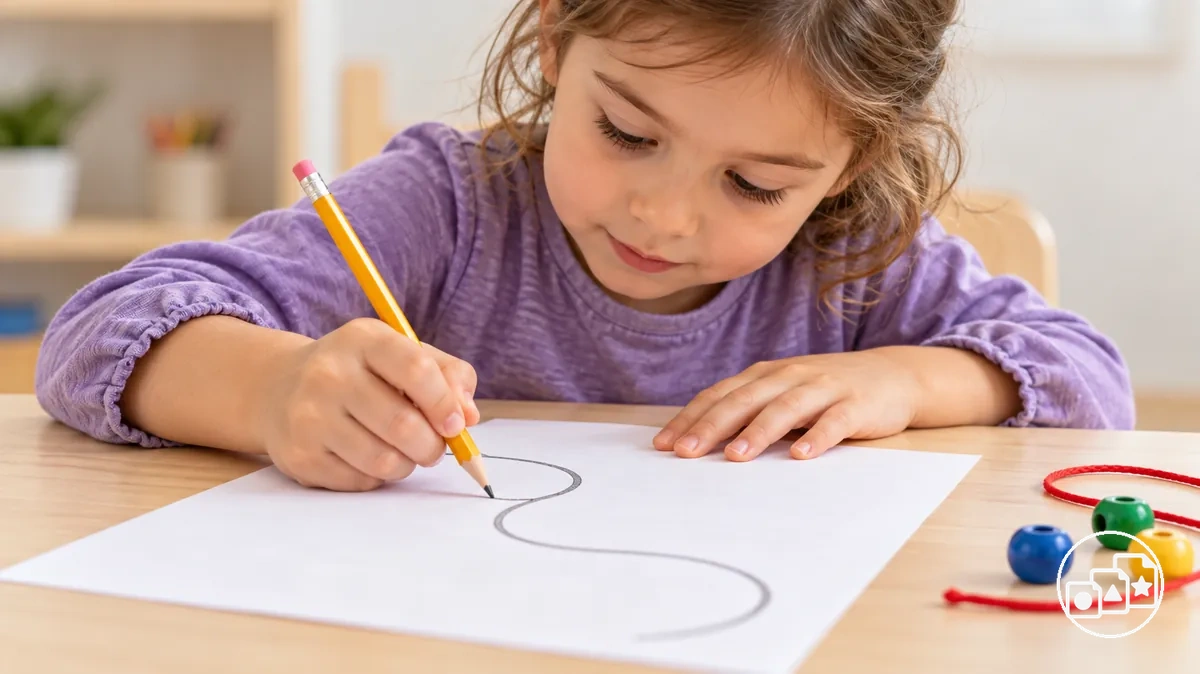
Drawing, tracing, and pencil-control activities can increase the precision required for intentional marks by changing the size and shape of the path the pencil follows.
The core goal remains controlled mark-making; narrower paths and more direction changes require greater movement accuracy and pencil control.
Progress the precision demand
- Start with freer or larger drawing movements, where the larger task size allows broader pencil movement with a lower precision demand.
- Use broad tracing paths or simple shapes to add a visible boundary and require more controlled line placement.
- Narrow the path width to increase the precision and stability required to keep pencil movement within the intended area.
- Add simple direction changes or more controlled tracing when appropriate to the child's current control, increasing the accuracy required as the pencil follows the changing path.
Task size, path width, and direction changes determine how precisely the pencil must be positioned and adjusted. A larger drawing area or broader path allows more movement space, while a narrower path requires more precise line control.
Adjust these constraints to the child's current pencil control rather than treating the sequence as a rigid developmental schedule.
The progression changes the task demand without changing the core fine motor target: controlled, intentional mark-making.
Cutting and Paper-Craft Activities
Cutting and paper-craft activities can build scissor control by changing the precision required from the cutting hand while the other hand stabilises and repositions the paper.
Use the progression to change the cutting-task demand, not as a fixed milestone schedule.
Progress the cutting demand
- Begin with opening and closing the scissors or simple snipping, where the main demand is controlling the cutting action while keeping the paper positioned.
- Progress to a simple straight cut along a clearly visible line, adding the precision needed to guide the scissors forward while the stabilising hand manages the paper.
- Use a curved cut when appropriate to current control, requiring more coordinated changes in cutting direction and paper position.
- Cut around a simple shape to increase the precision demand further as direction changes require continued scissor control and repositioning of the paper.
Cut complexity, line visibility, paper stability, and material properties can all change the difficulty of the same cutting practice.
A clearly visible straight path is easier to follow than a path with direction changes; curved lines and simple shapes require more precise visual guidance as the cut changes direction.
Stable paper gives the cutting hand a more controlled working surface, while paper that must be repositioned places greater demand on bilateral coordination between the cutting and stabilising hands.
Adjust these conditions to current control so the sequence represents increasing task complexity rather than a universal developmental sequence.